
Which aggregate screens work best for high-volume screening?
High-volume aggregate processing requires equipment capable of maintaining 90% to 95% screening efficiency while handling feed rates exceeding 1,200 TPH (tons per hour).
The primary solution involves multi-slope banana screens which utilize thin-bed depth mechanics to achieve 1.5 to 2.0 times the capacity of traditional horizontal decks by accelerating material across a 34-degree initial decline.
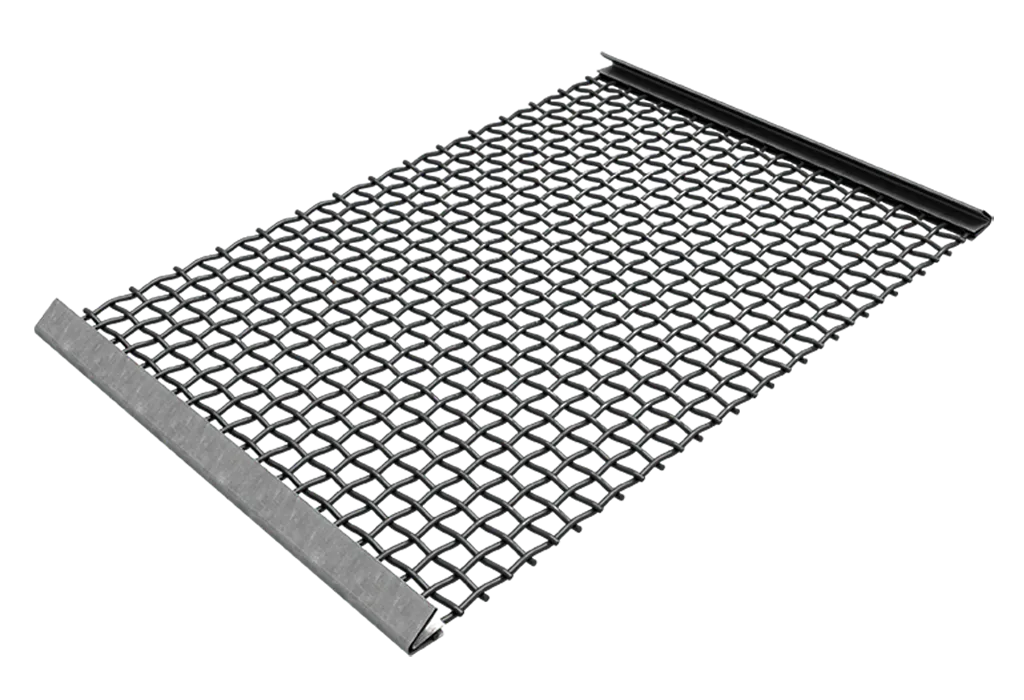
A 2024 industrial audit of heavy-duty quarrying plants demonstrated that standard circular motion machines lose 22% of their accuracy when bed depth exceeds 3.5 times the aperture size. High-volume demands force a transition to linear motion kinematics, which use dual-unbalanced motors to create a consistent 45-degree stroke that forces particle stratification regardless of input surges.
This constant force prevents the accumulation of near-size particles that typically dwell on the deck, a process that leads directly to the deployment of multi-slope geometry for maximum throughput.
"Data from 500+ mining sites shows that increasing the initial deck angle to 30 degrees reduces the material residence time by 40%, allowing the 'fines' to pass through the mesh in the first 1.5 meters of the screen box."
By stripping away 60% of the undersize material at the feed end, the remaining deck area can focus on precise sizing rather than simply managing the sheer mass of the incoming flow. This velocity-driven approach transitions the material from a thick, sluggish layer into a fast-moving stream, which is the exact environment where specialized aggregate screens provide the highest return on energy consumption.
| Feature | Horizontal Screen | Banana (Multi-Slope) | High-Frequency |
| Typical TPH | 400 - 800 | 1,000 - 3,000 | 100 - 400 (Fines) |
| G-Force Range | 3.0 - 4.5 Gs | 4.0 - 6.0 Gs | 6.0 - 10.0 Gs |
| Deck Angle | 0° - 5° | 34° down to 5° | 15° - 25° |
The high G-forces mentioned in the table are necessary because moisture levels as low as 4% can cause fine particles to stick to the wire, effectively reducing the open area of the mesh by 30% within 15 minutes of operation. When the volume is high, there is no time for manual cleaning, making the self-cleaning properties of high-frequency vibration a necessity for secondary circuits.
These machines apply vibration directly to the screen cloth at 3,600 RPM, leaving the heavy support frame stationary to save energy.
"A 2023 field study on manufactured sand production found that high-frequency units increased the recovery of minus-4 mesh material by 18% compared to traditional inclined vibrating units."
This efficiency gain at the fine-sizing stage ensures that the primary scalping unit—often a massive inclined screen—is not overwhelmed by recirculating loads that can bloat operational costs by $0.15 per ton. Effective scalping requires heavy-duty steel punch plates or thick rubber media capable of withstanding the impact of 400mm rocks falling from a conveyor.
Once the primary boulders are removed, the focus shifts to the durability of the aggregate screens used in the middle of the plant flow. Polyurethane panels have largely replaced wire mesh in high-volume settings because they last 10 to 15 times longer, reducing the downtime required for media changes which can cost a plant $5,000 per hour in lost production.
Modern modular panels feature a "snap-in" design that allows a single technician to replace a worn section in less than 10 minutes, ensuring the plant stays at its 98% availability target.
"Industrial testing on 20mm granite feed indicates that polyurethane decks maintain 92% aperture integrity after 2,000 hours, whereas high-tensile wire shows significant 'pegging' after only 450 hours."
This longevity is vital because high-volume systems are often integrated into automated circuits where any stop triggers a cascade of sensor alerts across the entire $20 million facility. Managing the resonance of these massive machines is the final piece of the volume puzzle, as a screen box vibrating at 900 RPM can transmit destructive forces into the steel structure if not properly isolated.
Isolation systems using heavy-duty rubber buffers or marshmallow springs absorb 95% of the dynamic energy, preventing structural fatigue in the plant's support skeleton.
As output targets move toward the 2,500 TPH mark, the industry is seeing a shift toward double-deck banana screens equipped with intelligent vibration sensors that adjust the motor speed in real-time based on the weight of the material on the deck. These sensors can reduce energy waste by 12% during gap-fed periods while ensuring the stroke remains powerful enough to clear the deck during peak surges.
Choosing the right screen is ultimately a math problem involving the specific gravity of the rock, the moisture content, and the required cut-point precision. High-volume success depends on keeping the material moving fast at the start and then slowing it down just enough at the end to let the final sizing happen.
Working on something similar?